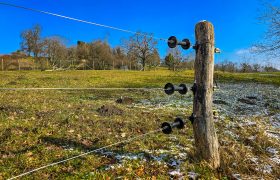
Electric fencing can be safe, humane and effective when it’s planned and built to the rules. Australia calls up AS/NZS 60335.2.76 for the safety of energisers, with extra guidance on signage, crossings and powerline clearances. If you’re also upgrading water on the property, many households review garden layouts and residential irrigation systems at the same time to streamline works.
Start with the standard and a compliant energiser
Only use an energiser that states compliance with AS/NZS 60335.2.76. That standard covers energisers up to 250 V and sets the test and approval framework that reputable brands follow. Buying a cheaper, non-compliant unit risks nuisance shocks, radio interference and insurance grief. Check the product datasheet or label for explicit reference to the standard.
Plan the fence line and choose safe components
Walk the line before you build. Avoid routes that would entangle people or animals, and never electrify barbed or razor wire. If you retain an old barbed fence, mount offsets so live wires sit at least 150 mm away from the barbs, and earth the barbed strands at intervals. Lay out insulated end strainers, quality line insulators and UV-stable lead-out cable so you’re not improvising on site. Supply houses that stock fencing often also carry commercial irrigation supplies, which can be handy when you’re trenching for both water and cable.
Respect powerlines and underground services
Treat powerlines as a hard constraint. The standard sets minimum clearances for nearby lines and requires you to cross beneath them at right angles if a crossing is unavoidable. Keep fence conductors and leads below 3 metres in the defined corridor near lines, and never string parallel under sagging spans. A quick call to Dial Before You Dig helps you map buried services before you drive posts or trench.
Get earthing right
Good earthing is the foundation of a reliable fence. Place the energiser’s earth electrode in permanently moist soil and keep it well away from other electrical earths. The standard calls for at least 10 metres between the energiser earth and any mains protective earth or telecommunications earth. Run high-voltage underground cable in insulating conduit where it passes under gateways or tracks so hooves and tyres can’t damage it. If you operate pumps or controllers for automatic irrigation systems, keep their electrical earths separate from the fence earth and observe manufacturer instructions to prevent interference.
Build the line: posts, insulators and wire routing
Set end assemblies first, then intermediate posts to suit terrain and stock pressure. Fit insulators before pulling wire so nothing rubs on timber or steel. Keep lead-outs well clear of earthed frames and sheds; inside buildings, use proper high-voltage insulated cable rather than standard electrical wire. Avoid sharing conduits with mains or data; that is expressly disallowed and creates unnecessary risk. Where the fence must pass under a track, sleeve the cable and mark the route on your property plan.
Signage, crossings and public areas
Any section that runs along a public road or pathway needs warning signs at regular intervals. Signs should be at least 100 mm by 200 mm, yellow both sides, with black lettering or the standard symbol, and letters at least 25 mm high. Where the fence crosses a public path, provide a stile or a non-electrified gate and add warning signs to the adjacent wires. In urban fringe blocks, you might also be juggling garden upgrades with sprinkler systems Perth installers or irrigation suppliers Perth WA, so coordinate trenching and gate locations to avoid rework.
Keep independent circuits separate
Do not feed a single fence from two energisers. If you run two independently timed energisers on adjacent lines, maintain at least 2.5 metres between those live wires unless you install a non-conductive barrier. This spacing helps prevent hazardous combined pulse effects and unwanted coupling in wet conditions. Map these separations on the farm plan so future alterations don’t accidentally close the gap.
Gates, laneways and stock handling
Use insulated gate handles and purpose-built under-gate cable for every opening. Keep live jumpers tidy and high enough that a rushed animal or a hurried contractor can’t snag them. In laneways, lift the bottom live wire or use removable droppers to reduce trip hazards when moving machinery. If you’re buying posts, insulators and cable from a rural merchant that also sells agricultural irrigation supplies Perth, you’ll usually find warning signs and cut-out switches in the same aisle, which makes compliance simpler.
Test, maintain and document
Before you let stock near the fence, test pulse voltage at the far end and at gates. A noticeable drop often points to poor earth contact or vegetation load. Check sign visibility after the first rain and after slashing. Keep a short log: energiser model and rating, earth location, test readings at fixed points, and dates when you cleared growth or repaired leads. That record is handy if you ever need to show how you manage electrical risks on the property.
Quick safety checklist
- Compliant energiser labelled to AS/NZS 60335.2.76.
- Proper earthing in moist ground, at least 10 m from any other earth.
- No electrified barbed or razor wire; use offsets if retaining old fences. Respect powerline corridors and crossing rules.
- Warning signs sized and coloured as specified; crossings provided on public paths.
Build to the standard, document what you’ve done, and keep the line tidy. That approach keeps people, animals and equipment safe while your fence does its job.
Leave a Reply
You must be logged in to post a comment.