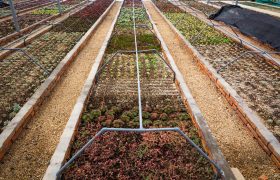
Australian agriculture depends heavily on water, from vineyards in Margaret River to vegetable growers across the Swan Coastal Plain. Every litre applied to a paddock carries financial and environmental weight. With irrigation making up nearly two‑thirds of national water use, growers increasingly need systems that maximise efficiency without compromising crop quality or farm viability.
Advanced drip irrigation has shifted rapidly from a niche solution to a mainstream strategy recommended by suppliers of commercial irrigation supplies. Compared with traditional flood or furrow irrigation, modern drip systems can lift water‑use efficiency from roughly 50–60 per cent to 85–95 per cent. Trials consistently show water savings of 30–50 per cent while maintaining or improving yield. For farmers facing tight allocations, these gains can determine whether they maintain production or are forced to reduce plantings.
Why apply water drop by drop?
Drip irrigation works on a simple principle: deliver water slowly and precisely to the root zone rather than soaking the entire paddock. With evaporation, runoff and deep drainage significantly reduced, more water reaches the plants and soil moisture remains far more consistent.
This method reshapes daily irrigation choices in three key ways:
- Uniformity: A well‑designed system applies water evenly, helping every plant perform consistently.
- Control: Growers can adjust flow rates and schedules by crop type, soil, block and season, often supported by moisture probes and climate tools.
- Nutrients: Fertilisers can be injected into drip lines, improving nutrient uptake and reducing runoff into waterways.
The result is better performance per megalitre and more stable production across increasingly hot and variable Australian seasons.
The water maths: savings that show up on the bottom line
Growers relying on agricultural irrigation supplies in Perth and regional WA know that each megalitre saved can be redirected to more hectares, high‑value crops or reserved for a dry finish. Studies comparing modern drip with older flood systems consistently report water savings of 40–70 per cent, paired with yield improvements of 20 per cent or more in vegetables, sugarcane and other irrigated crops. When allocation cuts or rising water prices hit, these efficiencies quickly outweigh the upfront investment.
State of drip irrigation in Western Australia:
Western Australia continues to transition away from flood irrigation toward micro‑spray and drip systems as rainfall declines and groundwater regulation tightens. Subsurface drip—installed beneath the soil surface—is attracting interest in broadacre and pasture operations because it protects water from wind and heat while allowing machinery to operate freely above.
Support from irrigation suppliers in Perth WA and regional service teams has made adoption smoother and more practical for growers.
Beyond broadacre: drip in horticulture and around the home
Drip remains ideal for vineyards, orchards and high‑value horticulture where trellised and permanent plantings benefit from precise watering. In peri‑urban areas, growers often pair drip with low‑throw sprinklers and shade structures to maintain crop quality during heatwaves.
The same logic applies to residential properties and lifestyle farms. Well‑designed residential irrigation systems often use drip for garden beds and trees, supported by smart controllers that adjust watering through the seasons.
On larger blocks, combining drip with small sprinkler heads in automatic irrigation systems helps keep lawns, shelter belts and horse paddocks healthy with minimal manual adjustment.
In urban areas, drip integrates neatly with sprinkler systems in Perth. Sprinklers handle large turf zones, while drip provides efficient watering for shrub beds and median plantings where overspray would waste water and fertiliser.
Many suppliers specialising in broadacre and landscape projects now offer complete drip packages suitable for everything from backyard food gardens to mixed commercial enterprises. Integrated components—pressure‑compensating emitters, filtration systems, valves and control units—make installation more reliable and reduce long‑term maintenance issues.
Choosing the right system and supplier
The performance of any drip system depends on its design and after‑sales support. When comparing suppliers in Perth, growers should consider:
- Is the system correctly sized for current pump capacity and future expansion?
- Are filters and flushing systems adequate for local water conditions?
- What support is available for controllers, sensors and irrigation software?
Also Read: 5 Reasons Why Automated Irrigation is the Future of Climate-Resilient Farming
Drip irrigation: save water without shrinking production
Australian farmers have always adapted to working with limited water. Advanced drip irrigation gives them a practical way to cut waste while protecting crop area, quality and profitability. The technology is proven, widely supported and flexible across enterprises—from orchards and vineyards to mixed farms and semi‑rural holdings.
As climate pressures increase and water stewardship becomes even more important, growers using efficient irrigation are better positioned to secure licences, manage costs and demonstrate sustainable practice. One emitter at a time, drip irrigation is helping farms thrive under changing conditions.
Leave a Reply
You must be logged in to post a comment.