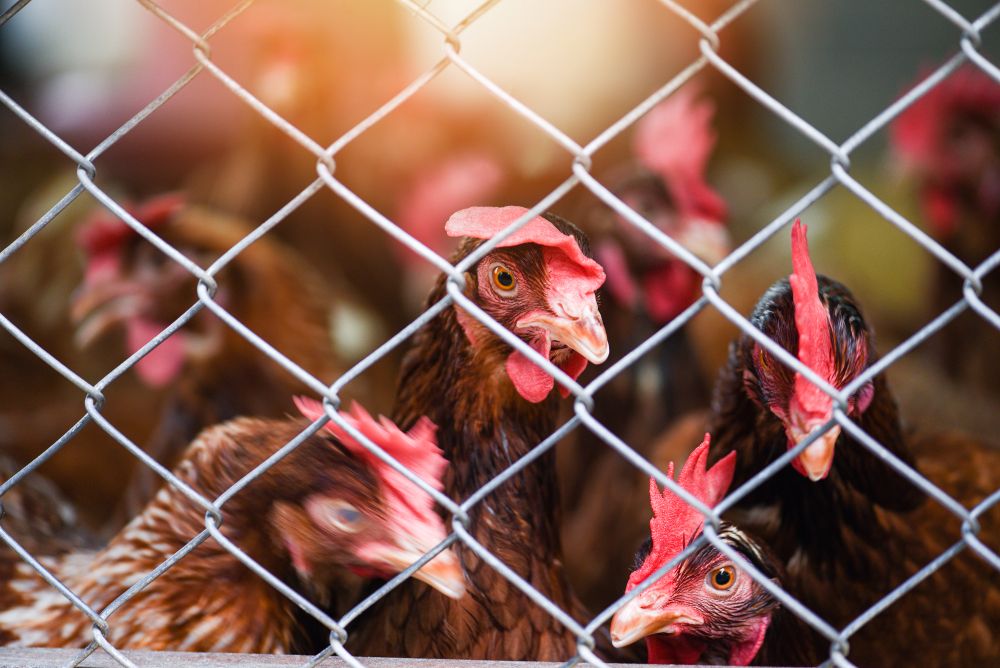
A secure poultry enclosure starts with the right barrier. For most backyard and small-scale keepers across WA, small aperture chicken netting gives better protection than wide mesh because it reduces the gaps pests use to get in.
In local conditions, galvanised chicken netting products are often the practical choice, as they handle weather well, resist rust, and suit long-term outdoor use.
The Best Way to Keep Snakes and Mice Out
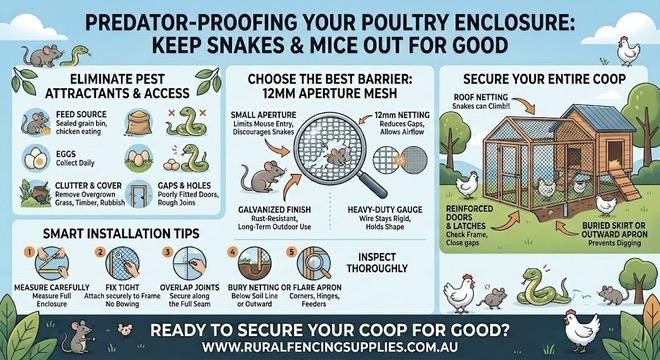
- Use tight mesh across the full run, not just around the sides.
- Cover the roof, door edges and lower perimeter, where most gaps appear.
- Choose mesh small enough to limit mouse entry and discourage small snakes.
- Keep feed sealed and collect eggs daily, as food sources attract rodents and snakes.
Why Snakes and Rodents Get into Poultry Enclosures
- Mice and rats enter for feed, shelter and nesting material.
- Snakes are often attracted by eggs, chicks, rodents and shaded hiding spots nearby.
- Untidy grass, stacked timber, loose rubbish and open compost create cover around a coop.
- Gaps under walls, rough joins and poorly fitted doors are common entry points.
12mm chicken netting for vermin control
- A 12mm aperture is a practical size for backyard poultry enclosures because it reduces access at ground level without blocking airflow.
- Fine mesh is widely used for exclusion. Smaller openings are needed to keep mice out than to stop rats.
- The most useful placement is around lower walls, feed storage areas, and where the run meets the ground.
Heavy-duty galvanised chicken netting
- Heavier-gauge wire holds its shape better and is less likely to sag over time.
- Galvanised mesh suits damp and outdoor conditions better than untreated wire, which can weaken with exposure.
- Stronger mesh also allows for tighter, cleaner fixings at posts, battens and door frames, helping reduce weak points.
What to Ask Chicken netting suppliers in Perth
- When buying from chicken netting suppliers in Perth, check the aperture size first, then the wire thickness and finish.
- Ask whether the roll suits ground contact, roof sections and buried skirts.
- Local supply makes it easier to match products to WA conditions and to extend or replace sections later.
Tips for a Predator-proof chicken netting
- Fit mesh to the roof as well as the sides; snakes can climb, and open tops leave an easy way in.
- Overlap joins and fasten them tightly so no small gaps open along seams.
- Add a buried skirt or outward-facing apron to reduce access underneath.
- Reinforce doors with secure latches and check the frame, not just the mesh panel.
How to Install Netting to Stop Snakes and Mice
- Measure the full enclosure before cutting anything.
- Fix the mesh tight to the frame so it does not bow or lift.
- Overlap all joins by at least one grid and secure them along the full seam.
- Extend the bottom edge below the soil line, or flare it outward and pin it down.
Inspect corners, hinges and around feeders once finished.
What to Look for in Snake-Proof Netting
- 12mm aperture or similar fine mesh
- Rust-resistant galvanised finish
- Wire sturdy enough to stay rigid
- Roll height that reduces unnecessary joins
- Easy compatibility with staples, clips or tie wire
A well-fitted enclosure using the right mesh will do far more to keep snakes and mice out than traps alone.
Protect your flock with quality mesh built for Australian conditions and keep pests where they belong, outside the enclosure. Explore Rural Fencing Supplies for durable netting options that help create a safer, more secure poultry setup.
Frequently Asked Questions
Can snakes get through 12mm chicken netting?
In many cases, 12mm mesh is a solid deterrent for small to medium snakes because it leaves far less room than standard wide-gap poultry wire. It is not a reason to ignore the rest of the enclosure, though. Snakes may still enter through roof gaps, loose doors or spaces under walls if those areas are not secured.
How to install chicken netting to keep mice out?
The most effective method is to run the mesh tight to the frame, overlap each seam, and secure the lower edge properly. Mice exploit small openings, so weak points are usually corners, joins and door frames rather than the centre of a panel. Pair the netting with clean feed storage and prompt spill removal for better results.
What is the best chicken netting for snake proofing?
For most backyard coops, fine-aperture galvanised mesh is a reliable option because it combines a tighter opening with solid outdoor durability. Standard large-gap chicken wire may contain birds, but it is not designed as a dedicated snake barrier. A complete setup matters just as much as the mesh itself.
Is standard chicken netting enough to stop rodents?
Usually not on its own. Traditional poultry wire is designed to contain chickens, not exclude small pests, and mice can get through much smaller gaps than expected. Finer mesh, tidy storage and regular checks work better as a combined approach.
Leave a Reply
You must be logged in to post a comment.