
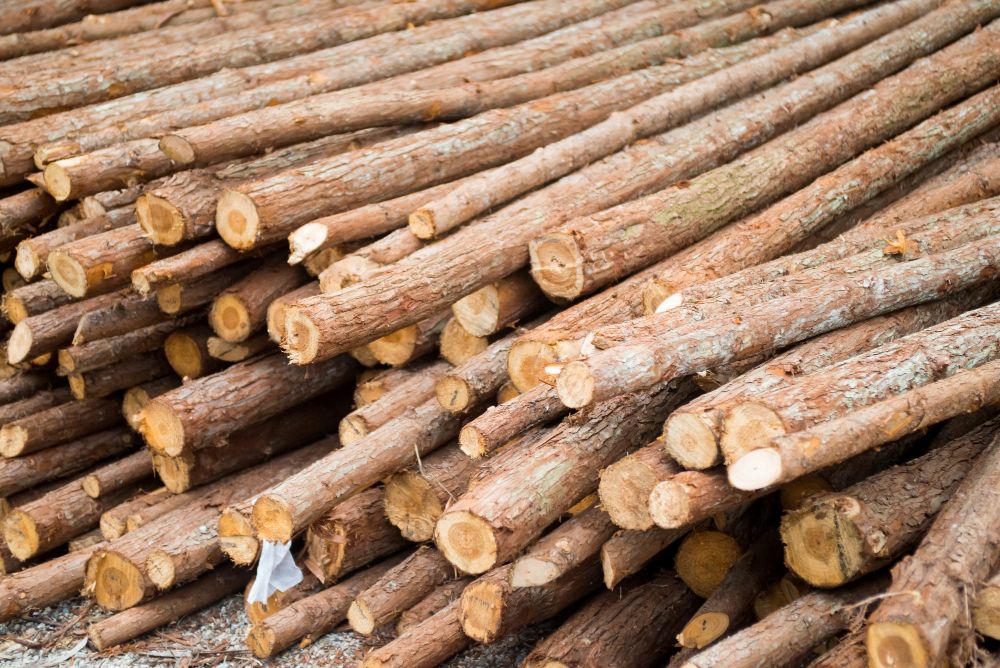
CCA treated pine poles are widely used because they are pressure-treated for in-ground outdoor service, where decay, insects and moisture are the main causes of early failure. In Perth, that matters even more: hot dry summers, wet winters, sandy soils and active termite pressure can damage untreated timber quickly.
For many property owners, the question is simple: will treated pine poles last once buried and exposed year-round? This guide explains why CCA treatment works, where H4 and H5 classes fit, what Perth conditions do to timber, and the practical limits to keep in mind based on current Australian standards and guidance.
Quick reference
- CCA treatment is used to protect timber from insects, fungal decay and rot in outdoor and in-ground settings.
- H4 timber is intended for severe in-ground exposure; H5 is for even harsher in-ground or fresh-water conditions.
- Perth’s climate combines dry, high-UV summers with wet winters, so both sun and seasonal moisture cycles matter.
- The termite resistant timber poles most people look for are treated, not naturally termite-proof, so treatment class and installation still matter.
- For fencing, rural use and many landscape applications, CCA timber poles remain a practical option in Western Australia.
Why CCA treated pine poles matter now
CCA is not new, but it remains relevant because it addresses the same three threats that shorten timber life:
- Insects,
- Decay fungi and
- Prolonged wetting
The APVMA states that CCA is widely used on outdoor timber, including poles, fencing and landscaping timber, to help protect against insect attack and decay.
How Perth’s Sandy Soil and Climate Affect Timber Poles
Perth sits on the Swan Coastal Plain, where much of the soil profile is formed from coastal and wind-blown sands. Sandy ground often drains quickly, which can reduce standing moisture around a pole, yet buried timber still faces alternating wet and dry cycles, especially through winter rain and irrigation.
That is where the hazard class system becomes important.
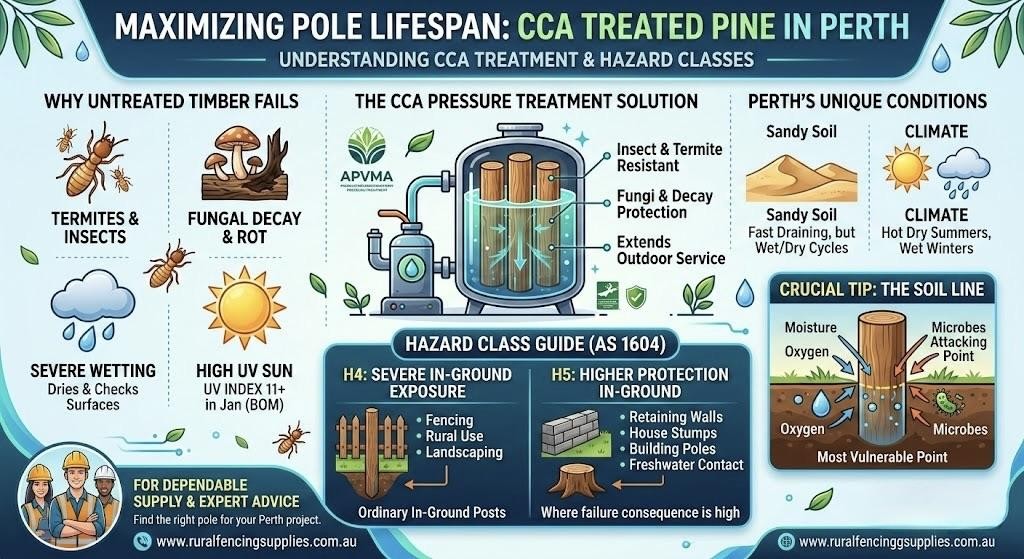
Under AS 1604 guidance, H4 is for outside, in-ground use with severe wetting and leaching, while H5 is for outside, in-ground contact or fresh water where a higher level of protection is needed.
Fence posts and landscaping timbers sit in H4. Retaining walls, house stumps and building poles move into H5.
- Match the pole to the exposure, not just the job title.
- Use H4 for standard in-ground posts and H5 where moisture load or consequence of failure is higher.
- Check branding so the treatment class is clearly visible.
The real weak point is rarely the section above ground; it is the soil line, where oxygen, moisture and microbes meet.
That is why correct class selection matters more than appearance.
Why CCA Treated Pine Poles Perform Well in Perth
- CCA works by pressure-treating timber so preservative penetrates the wood and protects it from fungal decay, borers and termites.
- For ground contact timber, that makes treated pine a practical choice where untreated pine would break down much faster outdoors.
- Untreated pine exposed to moisture can rot in a short time, while CCA-treated pine has long been used for extended outdoor service.
Perth also brings a second issue: sun. The Bureau of Meteorology states UV values of 3 or above require protection, and average January values of 11 or more cover virtually all Australia under clear skies. That does not remove preservative from the timber, but strong sun can dry and check exposed surfaces, so high UV timber protection is as much about design and maintenance as treatment.
Comparative analysis
| Option | Best use | Main strength | Main limitation |
| H4 CCA pole | Standard in-ground posts | Built for severe in-ground exposure | Not for high-contact domestic items |
| H5 CCA pole | Higher-risk in-groundwork | Greater protection in harsher wet conditions | Often more than needed for routine fencing |
| Untreated pine | Dry, temporary, sheltered use | Lower upfront cost | Poor resistance to rot, insects and ground contact |
Choose CCA treated pine poles with the right hazard rating for your site, so your fencing or outdoor project is built to handle Perth’s termites, soil conditions and weather. For dependable supply and practical advice, contact Rural Fencing Supplies to find the right pole for the job.
Frequently asked questions
How long do CCA treated pine poles last in Perth soil?
Service life depends on treatment class, drainage and installation quality. Properly selected H4 or H5 poles are designed for outdoor in-ground exposure, but the highest stress point is usually the soil line, especially where wetting and drying repeat.
Is CCA treated timber safe for garden use?
It can be used where frequent contact is unlikely, such as fencing or edging, but restrictions apply to high-contact uses like furniture. Keep edible plants separated from treated timber as a sensible precaution.
Difference between H4 and H5 treated pine poles?
H4 is intended for severe in-ground exposure such as fence posts and landscaping timbers. H5 is for more extreme in-ground or fresh-water exposure where the consequences of decay are higher.
Where to buy wholesale CCA treated poles in Perth?
Buy from established fencing or timber suppliers that clearly state hazard class, treatment type and branding. The key check is not the sales channel itself, but whether the product is properly marked to the relevant standard.
Leave a Reply
You must be logged in to post a comment